


The Rise of Artificial Intelligence in Business: Transformative Features and Real-World Impact

Artificial intelligence (AI) is no longer a distant concept from science fiction. It has become a powerful tool reshaping how businesses operate across industries. From automating routine tasks to providing deep insights from data, AI is changing the way companies compete and serve customers. This post explores the key features of AI, its benefits, and the real-world impact it has made. We will also look at challenges businesses face when adopting AI and consider what the future might hold.
What Makes AI Stand Out in Business
AI refers to computer systems designed to perform tasks that usually require human intelligence. These tasks include recognizing speech, understanding language, making decisions, and learning from experience. Several features make AI especially valuable for business:
Automation of repetitive tasks: AI can handle routine work such as data entry, scheduling, and customer inquiries, freeing employees to focus on complex problems.
Data analysis at scale: AI algorithms can process vast amounts of data quickly, identifying patterns and trends that humans might miss.
Personalization: AI enables companies to tailor products, services, and marketing to individual customer preferences.
Predictive capabilities: By analyzing historical data, AI can forecast demand, detect fraud, or predict equipment failures.
Natural language processing: AI understands and generates human language, powering chatbots and virtual assistants.
These features allow businesses to improve efficiency, reduce costs, and create better customer experiences.
Benefits Across Industries
AI’s impact is visible in many sectors, each benefiting in unique ways.
Retail and E-commerce
Retailers use AI to recommend products based on browsing history and purchase behavior. For example, Amazon’s recommendation engine drives a significant portion of its sales by suggesting items customers are likely to buy. AI also helps manage inventory by predicting demand, reducing overstock and stockouts.
Healthcare
AI assists doctors in diagnosing diseases by analyzing medical images and patient data. IBM Watson Health, for instance, supports oncologists by providing treatment options based on vast medical literature. AI-powered chatbots offer 24/7 patient support, answering common questions and scheduling appointments.
Manufacturing
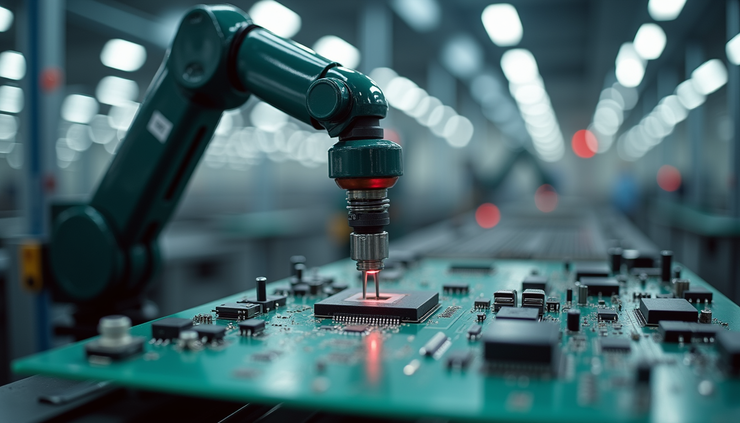
Factories employ AI-driven robots to perform precise assembly tasks, improving quality and speed. Predictive maintenance powered by AI sensors helps avoid costly machine breakdowns by alerting staff before failures occur. General Electric uses AI to monitor jet engines and optimize maintenance schedules.
Finance
Banks and financial institutions use AI to detect fraudulent transactions by spotting unusual patterns in real time. AI also supports credit scoring by analyzing alternative data sources, expanding access to loans. Robo-advisors provide automated investment advice tailored to individual risk profiles.
Transportation and Logistics
AI optimizes delivery routes, reducing fuel consumption and improving delivery times. Self-driving vehicle technology, though still developing, promises to transform freight and passenger transport. UPS uses AI to plan efficient routes, saving millions of miles driven annually.
Real-World Examples and Case Studies
Netflix’s Content Recommendation
Netflix uses AI algorithms to analyze viewing habits and recommend shows and movies tailored to each user. This personalization keeps subscribers engaged and reduces churn. The company reports that its recommendation system saves over $1 billion per year by retaining customers.
Starbucks’ DeepBrew
Starbucks developed DeepBrew, an AI engine that personalizes offers and product suggestions through its mobile app. It analyzes customer preferences, purchase history, and location data to deliver relevant promotions, increasing customer loyalty and sales.
Siemens’ Smart Factories
Siemens integrates AI into its manufacturing plants to monitor equipment and optimize production lines. AI systems detect anomalies and adjust processes in real time, improving efficiency and reducing downtime. This approach has led to significant cost savings and higher product quality.
Challenges and Criticisms of AI in Business
Despite its benefits, AI adoption comes with challenges:
Data privacy concerns: Collecting and analyzing customer data raises questions about consent and security. Companies must comply with regulations like GDPR to protect user information.
Bias and fairness: AI systems trained on biased data can perpetuate discrimination, affecting hiring, lending, or law enforcement decisions.
High implementation costs: Developing and integrating AI solutions requires significant investment in technology and talent.
Job displacement fears: Automation may replace certain roles, leading to workforce disruption and the need for reskilling.
Transparency and explainability: Some AI models operate as “black boxes,” making it hard to understand how decisions are made, which can reduce trust.
Businesses must address these issues carefully to ensure AI benefits all stakeholders.
Looking Ahead: The Future of AI in Business
AI will continue to evolve, becoming more accessible and integrated into daily operations. Advances in areas like explainable AI and ethical frameworks will help build trust. Small and medium-sized businesses will gain access to AI tools through cloud services, leveling the playing field.
Companies that combine AI with human creativity and judgment will find new opportunities for innovation. For example, AI can handle data processing while humans focus on strategy and relationship-building. The future points to a partnership between humans and machines rather than replacement.


Comments